


How to communicate with your guests before their arrival without saturating them (hotel guide)
In a small hotel, pre-stay communication often falls into two extremes: either too little is sent and reception is filled with repeated questions, or too much is sent and the guest feels “bombarded”. The solution is often a simple approach: fewer messages, more helpfulness, and a clear flow for the guest to complete what is important without endless exchanges.
In this approach, POK (pre check-in) functions as a “hub” of actions on a single link, and LEAN helps execute cadence with automations (when to send, who to remind and what to include in direct booking confirmations). The goal is not to sell, but to reduce friction, queries and errors, while maintaining professional and timely communication.
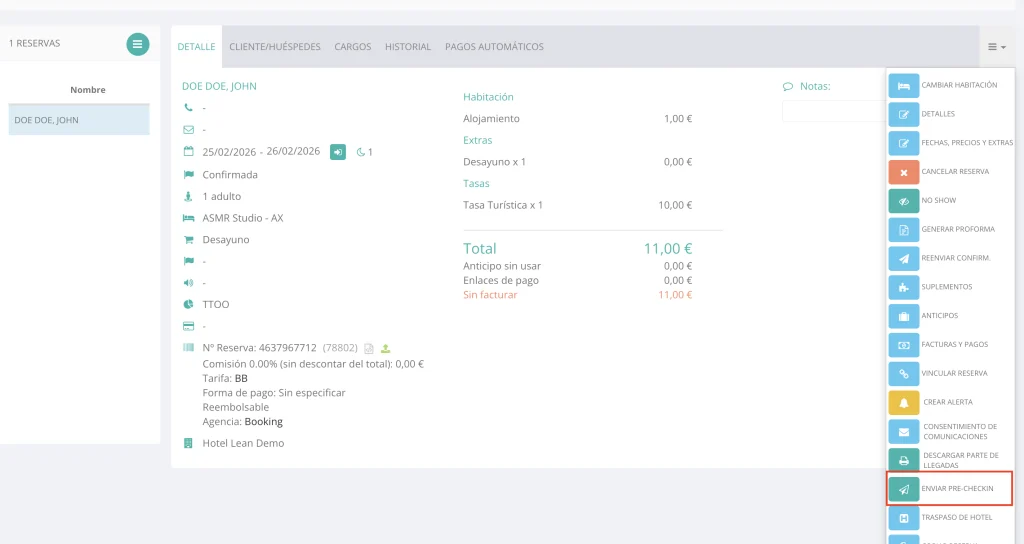
The key principle: fewer messages, more usefulness (and a single thread)
Prior to arrival, communication should resolve three things and no more:
- LogisticsHow to get there, opening hours, access, parking and contact.
- Information requirements: data/documentation if applicable for check-in.
- ExpectationsWhat is included in the reservation, what is not included and basic policies.
When each message has a clear action, the guest understands what to do. If you send several loose messages, the thread is lost and doubts increase. This is why a “actionable single message”.” (a link that concentrates tasks) and, at most, a conditional reminder.
- Exact address and how to get there (including access if there are particularities).
- Check-in/check-out times and what to do if you are late.
- Parking: location, cost/conditions if applicable and how to access.
- Direct contact with the hotel for incidents (telephone/WhatsApp/email depending on your operation).
- Basic policy related to your stay (cancellation/no-show in simple terms).
- Request for data/documentation if your process requires it (best in a guided flow).
- Repeated promotions in separate messages.
- Long texts with several themes mixed in.
- Redundant questions (asking the same thing twice through different channels).
- Messages without action (“just informing” without providing real value).
- Duplicate shipments by OTA + hotel without consistency.
Segment by type of booking to avoid sending the same thing to everyone.
Without minimum segmentation, there is a tendency to saturation. In a small hotel, simple segmentation is usually sufficient:
- Direct vs OTA (and differences in information already delivered by the channel).
- 1 night vs long stays (different needs: parking, timetables, luggage).
- Families vs. corporate (cradle, timetables, invoicing).
- Late arrivals (access, contact, key instructions).
- Repeaters (less explanation, more brief reminder if action is pending).
Segmentation reduces volume because it avoids sending information that does not apply.
The most efficient message: Pre Check-in (POK) as the “hub” of communication
Pre-check-in works as a unique link that the guest receives prior to arrival and from which he/she can complete actions without calling or exchanging emails. Descriptively, in this flow the guest can:
- Add necessary data (e.g. ID/passport if applicable).
- Indicate estimated time of arrival and departure.
- Review key information of the stay.
- Display available extras (optional).
- Pay if there is an outstanding amount (depending on configuration).
- Sign or confirm process steps where appropriate.
For the hotel, this often translates into fewer “slow” check-ins and fewer repeated questions at the front desk, because many queries are resolved within the same flow.
What should be included in the text of the message accompanying the pre check-in link?
An effective message is usually short and benefit + action oriented:
- Clear benefitSave time on arrival“ or ”Speed up your check-in“.
- Short list of actions (3-5) which it can complete.
- Realistic expectationavoid figures if they are not verified; you can say “in a few minutes”.
- SupportIf you have any questions, please contact us here.
Example of text (natural tone, not robotic):
“To speed up your arrival, we leave you this pre check-in link. You will be able to fill in your details, indicate your arrival time and check important information about your stay. If you need to, you can also manage extras or pending payment. If you have any questions, we are available at [contact]”.”
Recommended cadence: when to write to inform without overloading
The key is not to write “a lot”, but to write at the right time. A base cadence for a small hotel usually works with 2-3 hits maximum, adjustable by lead time.
Example aligned with a practical guideline:
- Sending the pre check-in 7 days before.
- Reminder 2 days before only if it has not been completed.
- Message on arrival day only if there is critical information (access, parking, relevant changes).
This cadence reduces saturation because the reminder is not sent to the person who has already taken the action.
Cadence model for small hotel (2 messages + 1 optional)
- Confirmation (immediate): the essentials and useful links.
- Pre check-in (7 days before): unique link to shares.
- Conditional reminder (2 days before)only if pre check-in has not been completed.
- Optional day of arrivalonly if there is critical information (PIN/access, parking, operational incidents).
How to automate these shipments from LEAN PMS (without losing control)
The strategy only works if it is executed consistently. LEAN allows you to automate the delivery of the pre-check-in process by configuring when it is sent y when to remember in case of non-completion. At a functional level, the idea is simple: you define the sending rule (e.g. days before arrival) and the system manages the sending so that it does not depend on someone “remembering”.
This relieves the burden on reception and avoids the chaos of “we didn't send anything today” or “we sent twice”.
Automation with logic “if not done, then reminder”.”
Conditional logic is the best way not to saturate:
- If the guest already completed pre check-in, you do not receive reminders.
- If the guest did not complete it, you receive a short, actionable reminder.
This way you reduce unnecessary messages and increase the completion rate without massive insistence.
Direct bookings: confirmation from LEAN as first “well done” message”
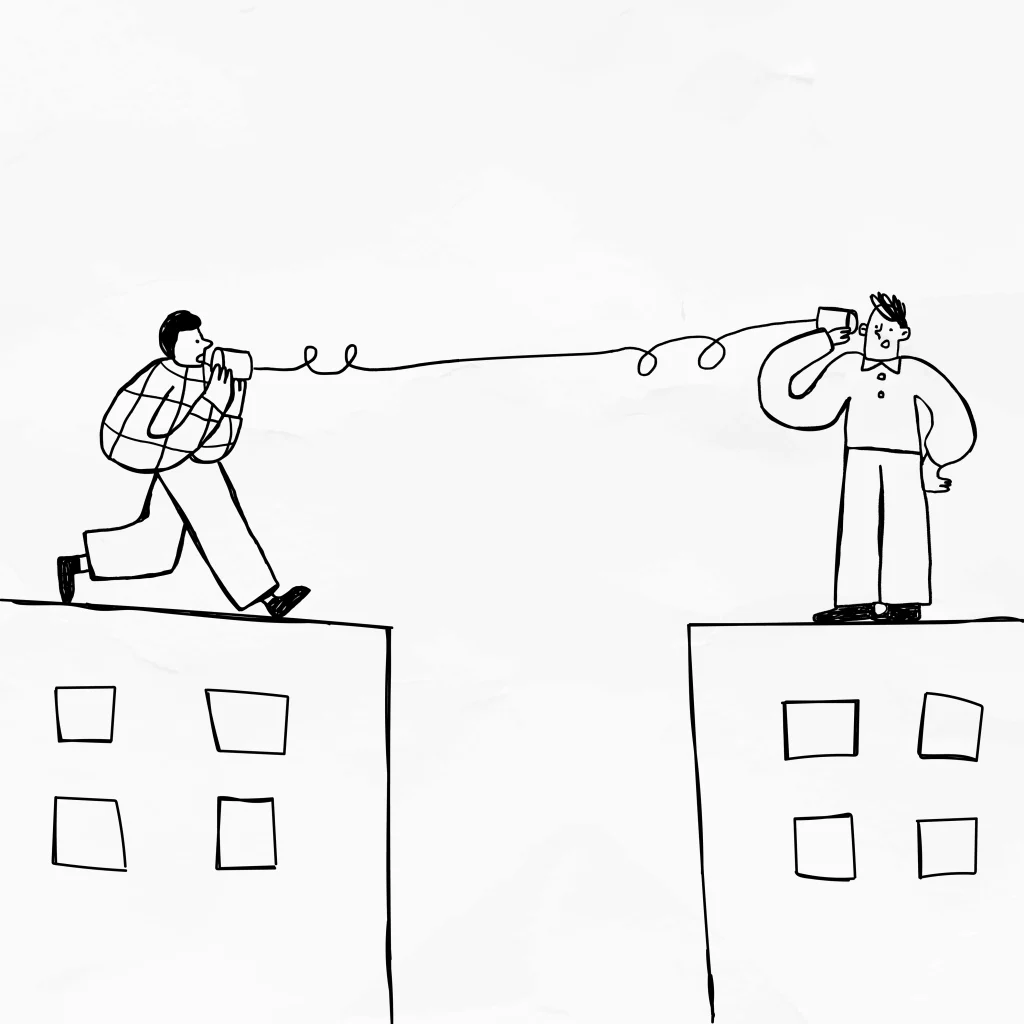
In direct bookings, the first message makes all the difference: if it is well structured, it reduces the volume of calls and queries. When creating a direct booking from LEAN, a confirmation email is sent to the hotel where the hotel can add the information you want. The key is not to make it a long text, but a clear guide to the essentials.
What usually adds value without going overboard:
- location and how to get there,
- timetables,
- basic cancellation/no-show policy,
- parking,
- contact,
- link to pre check-in if applicable, and clear access to extras if offered by the hotel.
What to put (and what not to put) in the confirmation email to reduce enquiries
What to put:
- Block structure with headings (“How to get there”, “Timetables”, “Parking”, “Contact”).
- Bullets and useful links (map, contact, pre check-in).
- Policies in simple language, without endless paragraphs.
What not:
- Long paragraphs without hierarchy.
- Repeating already obvious or redundant information.
- Aggressive selling of extras in the first mailing.
How to communicate extras without seeming spammy (and without lowering conversion)
The rule is: few extras, relevant and at the right time. In a small hotel it works better to integrate extras as a pre check-in option than to launch separate campaigns.
Practical principles:
- It offers 2-5 extras maximum (not 15).
- Contextualise: parking if the destination requires it, late check-out if there are late flights, breakfast if it is not included.
- Make it optional and clear (what is included, price, conditions).
- Avoid multiple promotional messages; if the guest has already seen the extras in the flow, they don't need another sales email.
Extras that usually fit well in pre-stay (depending on the type of hotel)
- Parking (if recurrent pain).
- Breakfast (if not included).
- Late check-out / early check-in (if available).
- Upgrade (if the hotel manages it judiciously).
- Cradle or family services.
- Pets (clear conditions).
- Transfers (if applicable).
Quality control: metrics and saturation signals
Without metrics, communication is adjusted “by eye”. In small hotels simple signals are sufficient:
- Pre-check-in completion rate.
- Reduction of repeated questions (check-in, parking, opening hours).
- Incidents at check-in (queues, incomplete data).
- Communication complaints or “too many messages”.
- Opt-out requests (if applicable).
- Openings/clicks if measured (not essential, but useful).
The idea is to check if you are achieving the goal: less friction and less load for reception.
Quick adjustments if you feel you're getting saturated
- Reduces hits (returns to 2 base messages).
- Use reminders conditionals (only if action is missing).
- Shorten texts and remove duplicate information.
- Consolidates into a single actionable link (pre check-in).
- Segment by type of guest and avoid “coffee for all”.
- Check for duplicity per channel (OTA + hotel sending the same thing).
Frequently asked questions on pre-arrival communication with guests
How many messages should a hotel send before arrival?
In many small hotels, 2-3 messages are usually enough: confirmation, pre-check-in link and a conditional reminder only if an action needs to be completed. Sending more messages tends to increase saturation and does not reduce enquiries. The key is that each message is actionable and does not repeat information.
What information is essential in pre-study communication?
Access and location, check-in/check-out times, parking if applicable, hotel contact and a basic policy related to the stay. If you need previous data to speed up the registration, the ideal is to include a link where the guest fills in this information in a guided way, avoiding asking for it in individual messages.
What is pre check-in and what can the guest do from the link?
It is an online pre-arrival process that allows the guest to complete key actions without spending time at the check-in desk. From the link you can add details (ID/passport if applicable), indicate arrival/departure time, review stay information, view optional extras and, depending on configuration, pay and sign in to speed up check-in.
When should I send the pre-check-in link?
A practical model is to send it 7 days before arrival and send a reminder 2 days before only if it is not completed. However, the cadence should be adjusted to the lead time of the hotel: if the majority of people are booking early, it can be sent earlier; if they are booking late, it can be sent earlier.
How do I avoid sending reminders to guests who have already pre-checked in?
With conditional logic: only those who have not completed the process are reminded. This reduces saturation and improves guest perception. In practice, this logic can be automated from the PMS (LEAN), configuring the reminder to be triggered only when the pre-check-in is not completed.
How do I communicate extras without making it look like spam?
Offer few, relevant and optional extras, preferably within the pre-check-in for the guest to see in one place. Avoid sending several separate promotional messages. The key is to contextualise (parking, late check-out, breakfast) and maintain clarity of price and conditions, without pressure.
What should the confirmation email include in direct bookings?
It should be the first “well done” message: location, opening hours, parking if applicable, contact and useful links (map, pre check-in if applicable). From LEAN you can add the information you want; we recommend a clear structure with bullets and avoid long paragraphs or hard sell, to reduce queries and improve the experience.
You may also be interested in


Adopting measures such as LED lighting, zoned climate control systems, motion sensors and aerothermics can reduce energy consumption by up to 40%. In addition to reducing the carbon footprint, these changes have a direct economic impact.
Investing in technology such as energy management systems (EMS) and home automation is a strategic investment. Hotels that have done so have recovered their investment in less than 3 years thanks to the reduction in energy costs. In our experience, connecting these systems to the PMS allows greater control, real-time reporting and better decisions.
Having certifications such as ISO 50001 or the European energy label not only guarantees regulatory compliance, but also provides brand value for guests who are increasingly committed to the environment.
📌 Empathy: Empathy is key to understanding customers' needs, which in the hospitality industry is essential to developing long-lasting, trust-based relationships. A team that practices empathy is in a better position to address customer concerns effectively and to offer personalised solutions that increase satisfaction and loyalty.
📌 Active listening: Related to empathy, active listening allows marketers to capture important details from conversations with customers. A team that listens can adapt its approach and offer solutions that truly address guests' concerns.
Adaptability in the sales process
Adaptability allows sales teams to adjust their strategies according to customer trends and preferences. In a changing marketplace, it is vital that the sales team responds quickly to customer expectations, maximising conversion opportunities.
REQUEST YOUR DEMO TODAY
Discover how Lean Hotel System can transform your hotel business