


How to manage guest expectations to avoid later complaints
Many complaints do not stem from “bad service” but from a difference between what the guest expected and what they actually find. This gap creates friction even when the hotel has performed well. Managing expectations means being proactive: communicate clearly, avoid ambiguity, and design a flow where the guest understands what their stay includes, what is subject to availability, and how sensitive issues are resolved (parking, spa, early/late check-in/out, views).
In small and medium-sized hotels, consistency is key: it shouldn't depend on “whoever is on duty.” A PMS like LEAN help to standardise confirmations, policies, and pre-messages with automation, and POK (pre check-in) can also act as an information channel to reduce uncertainty before arrival.
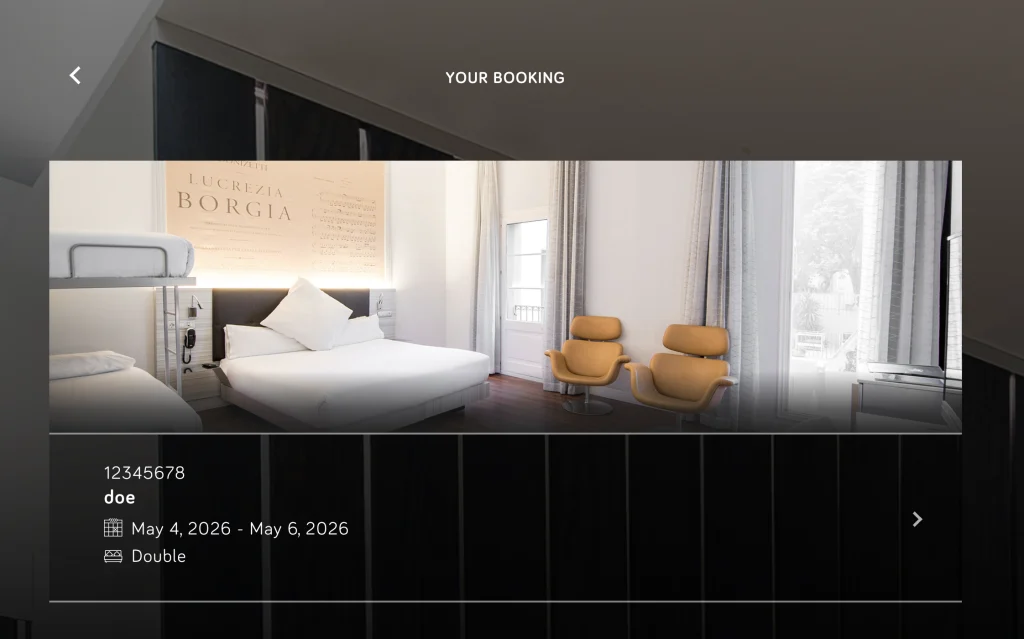
Where expectations are created (and why it all starts before check-in)
The “psychological contract” of a stay is formed long before the guest even sets foot in reception. It usually begins with:
- The Booking confirmationwhat the guest believes they have purchased.
- The previous emailsLogistics and conditions that determine peace of mind (or stress).
- The information ServicesSpa, breakfast, parking, actual opening times, advance bookings.
- The policiesEarly/late, cancellation/no-show, deposits, payment conditions.
- The Room type and what it includes: view, size, location, extras.
If these parts are confusing, reception inherits friction at the worst time: the peak of arrivals.
The 4 points where expectations are broken and complaints arise
In day-to-day operations, most friction falls into four categories:
- Services and availability“I thought the spa was free”, “there is no parking”, “there are no seats in the restaurant”.
- Times and schedules“Flexible” check-in interpreted as guaranteed, late check-out assumed, waiting times.
- Room and what it includesview, size, regime, location, noise level, accessibility.
- Costs and conditions: rates, deposits, extras, cancellation/no-show policies or unexpected charges.
Once you have identified these areas, you can develop preventive measures to reduce the incidence of repeat complaints.
Early signs of misaligned expectations (before they boil over)
There are signs that usually precede a complaint about expectations:
- Repeated questions like “Is it included?”, “Are you sure...?”
- Requests for early/late check-in/out treated as a guarantee (“I'm arriving at 10, so...”)
- Persistent doubts about parking, access, capacity or reservations for services
- Very specific view/location requests without accepting alternatives
- Preventative claims (“in other hotels...”), before even arriving
These signs are opportunities to correct with clarity, without confrontation.
Examples of unclear communication that generate complaints (and how to rewrite them)
A quick improvement is to identify ambiguous phrases and rewrite them with clear conditions. Format “before → better”:
- “Parking available” Parking available Subject to availability; en paid and spaces may be limited. If you need it, please let us know your arrival time so we can guide you.”
- “Flexible check-in” Check-in from X:00. Early check-in Subject to availability; If you arrive early, we can store your luggage and let you know when your room is ready.”
- “Sea view” Room with sea view (total/partial) according to category. If the view is a priority, please indicate your preference and we will do our best subject to availability.”
- “Spa included” Access to the spa Included/Not included according to tariff. May require advance booking and be subject to capacity limits. We recommend booking in advance if this is important to you.”
The key is not to “sell less”, but to prevent the guest from filling in the gaps with their imagination.
The ideal communication chain for aligning expectations (without overwhelming)
In small hotels, a minimal sequence is usually more effective than many messages:
- Immediate confirmation (well-structured).
- Previous message with logistics and sensitive conditions.
- Pre check-in as a single link to complete and review.
Few impacts, high clarity. If you also use reminders, make them conditional (only if an action is pending).
What absolutely must be included in the booking confirmation
To prevent misunderstandings, the confirmation should clearly include:
- Room type and board basis (what's included).
- Cancellation/no-show policy and payment terms, if applicable.
- Check-in/check-out times.
- Parking (conditions, payment, availability).
- Mandatory fees or charges if applicable.
- How to request extras and relevant conditions (spa, pets, cot).
- Direct contact channel.
From the PMS, you can standardise this content so that it always appears the same, using “guest” language.
Previous emails: logistics that avoid pressure on reception
The previous message (without lengthening it) usually works when it resolves what causes friction on arrivals:
- How to get there and actual access (including parking).
- Estimated time of arrival (simple question or link to indicate it).
- Early/late policy, explained without ambiguity.
- Advance booking for services with capacity limits (spa, restaurant) if applicable.
- Brief reminder of what is not included when it is a typical cause for complaint.
This reduces “surprises” at the check-in peak.
How to leverage PMS and automation to communicate consistently

Good communication fails when it relies on memory and unscripted interactions. With a PMS like LEAN, the aim is to turn it into a process: confirmations, pre-arrival messages, service information, policies, room type, and extras should be standardised and, where appropriate, automated. This way, the guest receives consistent clarity, and the hotel reduces errors caused by improvisation.
Checklist of policies that should be written in “guest language”
In small/medium hotels, it's advisable to check that these policies are written without jargon and with clear conditions:
- Early check-in / late check-out (subject to availability).
- Pets (conditions and possible charges).
- Children (ages, cribs, limits).
- Spa/capacity and need for reservation.
- Parking (payment, availability, booking).
- Deposits/guarantees, if applicable.
- Conditions for views (total/partial) and limited categories.
- Works/noise if applicable (better to give notice than create surprise).
POK as a tool for managing expectations (not just check-in)
Pre-check-in isn't just a process to save minutes. It can also be an initial information channel that reduces uncertainty: guests review key information, complete details, and arrive with the correct “mental map”. This leads to fewer repetitive questions and stops reception having to explain the same things to every arrival.
Before arrival, POK can help reduce uncertainty with…
- Facilitate online pre-check-in so that the guest completes what is necessary before arrival.
- Show exact times in communication linked to the process (avoid interpretations).
- Requesting advanced documentation when applicable, reducing rush at reception.
- Communicate additional services and conditions (extras, after-effects, bookings) not saturated.
- To reduce uncertainty about arrival with clear instructions (how to get there, what to do if you arrive early, who to contact).
To speed up your arrival, here is your pre-check-in link. You can complete details, indicate your approximate arrival time, and review important information (timetables, parking, and services).“
How to manage expectations about early check-in and late check-out without causing frustration
Early and late check-ins are one of the biggest pain points as many guests assume it's their right. The key is to explain two things: that it's Subject to availability And what alternatives does the guest have if they can't?.
Good communication practices:
- Define una Clear window Check-in from X:00; earlier subject to availability.
- Offers automatic alternatives: luggage storage, access to common areas, coffee/space recommendations.
- If there is a cost (when applicable), state it clearly and concisely.
- Avoid ambiguous phrases (e.g., “flexible”) without conditions.
Recommended policy: what is promised vs what is attempted to be delivered
Difference between promissory language and polite language:
- Promise (guaranteed) “Check-in from X:00. Late check-out until Y:00 with prior reservation (subject to rate/condition).”
- Courtesy (attempt): “If you arrive early, we'll do our best to get you checked in sooner, subject to availability. If not, we'll store your luggage and let you know.”
This protects the operation and reduces frustration.
Rooms, views and extras: how to describe without creating false expectations
Many conflicts arise from descriptions that sound better than they are. To avoid “it wasn't what I imagined,” it helps to be specific: realistic photos, clarifications of partial views, limited inventory in certain categories, and clearly explained conditions for extras.
Mini-checklist for room descriptions which reduces complaints
Include, where applicable:
- Approximate size (not to millimetre precision, but as a guide).
- Bed type and configuration.
- Location/floor if relevant.
- View (total/partial) and nuances.
- Potential noise (if there are more exposed areas).
- Accessibility if applicable.
- What is included and what is not included (breakfast, spa, parking, etc.).
Metrics to know if you're aligning expectations (without overcomplicating things)
You can measure improvement without advanced tools. Useful indicators:
- Fewer repeat questions at reception (opening hours, parking, “includes...”).
- Reduced volume of complaints for the same reasons.
- Fewer reviews with phrases like “it wasn't as I expected”.
- Higher rate of check-ins completed.
- Fewer issues with early/late (disagreements, delays, frustration).
- Fewer complaints about parking/spa/extras.
If repetitive incidents decrease, your communication is doing its job.
7-Day Implementation Plan to Reduce Complaints Due to Expectations
Short, actionable plan:
- Day 1: Audit current copy (web, confirmation, previous messages) and detect ambiguities.
- Day 2: Update confirmation with a “yes or yes” checklist.
- Day 3: Create/adjust prior logistics email (short, useful).
- Day 4: Rewrite early/late policy (promise vs courtesy + alternatives).
- Day 5: prepare POK as a prior information channel (not just a formality).
- Day 6: tests with 5–10 actual bookings and text correction.
- Day 7: Create a reception with a brief and coherent script (same language for everyone).
Frequently Asked Questions about Managing Guest Expectations and Preventing Complaints
Why are there complaints if the service has been satisfactory?
Because the guest doesn't just evaluate the service, they evaluate the difference between what they expected and what they received. If the prior communication was ambiguous (times, parking, “includes”), the guest fills in the gaps with assumptions. Aligning expectations from the booking reduces friction and makes the service seem more consistent.
A confirmation message should include:* **Clear identification of what is being confirmed:** State explicitly what the action or request is.
* **Key details of the confirmation:** This could include dates, times, quantities, prices, names, or any other relevant information.
* **Confirmation of understanding:** Phrases like "We have received your request" or "We confirm your booking" are useful.
* **Next steps or expected outcome:** Inform the recipient what will happen next and when they can expect it.
* **Contact information:** Provide a way for the recipient to ask questions or make changes.
* **A polite closing:** A simple "Thank you" or "We look forward to..." is appropriate.
You must clarify the room type and board basis, check-in/out times, cancellation/no-show policy, parking conditions, any applicable charges, and which extras require booking or payment. It is also advisable to include direct contact information and, if you use pre-check-in, the link or information on when the guest will receive it.
Subject to availability
Specifically: indicate actual time slots, explain what is guaranteed and what will be attempted, and offer alternatives (luggage storage, use of communal areas, notification when ready). “Subject to availability” works when accompanied by a clear plan and doesn't sound like an excuse.
En la preparación de su llegada, ¿cómo le ayuda el pre-check-in a prevenir quejas?
Because it centralises information and actions before arrival: requesting documentation, confirming times, explaining sensitive conditions, and reducing uncertainty. A well-designed pre check-in (POK) not only speeds things up, but also prepares the guest: they understand their booking better, arrive with fewer doubts, and typical front desk friction is reduced.
Which phrases tend to generate the most complaints for being ambiguous?
“Parking available”, “flexible check-in”, “sea view” and “spa included” often lead to complaints if conditions are not clarified. The solution is simple: specify payment/availability, actual time slots, if the view is partial or full, and if the spa requires booking, an extra charge, or is subject to capacity. Clarity is key, without long texts.
How do I know if my previous communication is working?
When repeat questions and complaints for the same reasons decrease, and when reviews mention less “it wasn't as expected.” It also helps to see more pre-check-in completion and fewer incidents regarding early/late arrivals, parking, or services with capacity limits. If the arrival peak is smoother, your communication is aligning expectations.
You may also be interested in


REQUEST YOUR DEMO TODAY
Discover how Lean Hotel System can transform your hotel business