


«LEAN allows you to work with automation for both individual bookings and groups, as well as arrival-related communications, such as pre check-in.»
LEAN Team
Hotel System
specialised in PMS
emerging
«Building guest loyalty isn't just about sending them a discount so they'll return. Loyalty starts much earlier: when the hotel is able to recognise them, remember useful information from their previous stays, tailor the communication and prevent every visit from feeling like it's starting from scratch.
That is where the... comes in Hotel CRM. Its function is to organise customer relations using contact details, stay history, preferences, segments, communications and other useful information to personalise the experience before, during and after the stay.
The difference between having data and actually working a CRM lies in what the hotel does with it. A database with thousands of guests that no one segments or uses adds little value. In contrast, well-organised information connected to operations makes it possible to recognise repeat guests, anticipate needs, automate communications and develop a more relevant relationship with each customer.»
What is a hotel CRM
A hotel CRM is a system designed to manage the relationship between the hotel and its guests. It centralises relevant customer information and allows it to be used for segmentation, personalising communications, identifying commercial opportunities and improving service.
It is not simply a list of emails or a spreadsheet with names and phone numbers. A useful CRM should make it possible to understand who the guest is within their relationship with the hotel: when they have stayed, what type of stay they have, what preferences are known, what services they use and how they have previously interacted with the establishment.
The objective is to turn scattered information into useful knowledge for operations and customer loyalty.
Why the hotel CRM cannot be separated from the PMS
An important part of the information that makes a CRM useful is actually generated right within hotel operations. Reservations, rooms used, previous stays, internal notes, incidents, spending or recorded preferences are all part of the day-to-day running of the PMS.
Therefore, completely separating the CRM and PMS can result in the sales team working with a partial picture of the guest while reception has different information.
In a LEAN environment, the customer database is connected to the hotel's actual activity. This means that the information used to get to know the guest does not rely solely on commercial campaigns, but also on what has happened during their stays.
The PMS as the primary source of guest data
The PMS makes it possible to build up a good portion of the guest's operational history. From it, for example, one can find out the dates on which they stayed, what type of room they booked, which establishment they used, what incidents were recorded or what internal observations the team left.
Useful preferences for future stays may also be retained provided that their processing is appropriate: preferred room type, previously used services or relevant operational information.
This allows customer loyalty to be based on real facts rather than just generic commercial segmentations.
A shared database for hotel chains
The CRM acquires even more value in hotel groups and chains. If each property maintains an isolated database, a guest may be considered “new” every time they visit a different hotel within the same chain.
A shared customer base makes it possible to build a more complete picture. The hotel can know whether that guest has already visited another property in the group, what type of room they used, what preferences they have on record, or what internal notes may be relevant for the new stay.
In LEAN, this approach enables hotels within the same chain to work with a connected database, preventing the knowledge generated at one property from being lost when the guest visits another.
What knowing a guest's history across multiple hotels provides
Imagine a guest who previously stayed at another hotel in the chain and usually books quiet rooms. When they visit a second property, that information can help provide a more consistent experience without forcing them to repeat their preferences.
The same applies to guests who have already booked specific services, corporate clients known to other hotels in the group, or previous issues that are worth bearing in mind.
The value does not lie in accumulating data, but in giving continuity to the relationship between guest and brand.
What data a hotel CRM must gather to be truly useful
A hotel CRM can include a wide variety of information, but not all of it has the same value. Some common data include contact information, stay history, properties visited, room used, booking channel, preferences, spending, internal notes, customer segment, communications sent and permissions related to commercial contact.
Data derived from booking behaviour, such as usual length of stay, direct booking or OTA, or previously contracted services, can also be useful.
All of this must be managed prudently and in compliance with applicable privacy and data protection obligations. The purpose of the CRM is not to store as much as possible, but to retain useful and legitimate information to improve the guest relationship.
Useful data versus data that just generates noise
A very large database is not necessarily a good database.
A repeated preference can be useful. A relevant incident can help to better prepare a new stay. Knowing that a guest usually books parking or normally travels for work can improve certain communications.
On the other hand, storing irrelevant observations, excessive notes or information that nobody uses generates clutter and makes it difficult to maintain a clean database.
A good question before saving a piece of data is: Will this really help to better assist the guest or to make a future decision?
How to categorise clients to better personalise the relationship
One of the main benefits of a hotel CRM is segmentation. Not all guests have the same needs or respond in the same way to the same communications.
The hotel can segment customers by profile, behaviour, booking source or commercial value. This makes it possible to tailor communications, services and loyalty initiatives in a much more relevant way.
There is no need to start by creating dozens of segments. For many hotels, a few well-defined categories are enough to significantly improve personalisation.
Examples of useful categories for a hotel
Some simple segments could be:
- Returning guest.
- Corporate client.
- Family.
- Couple or weekend getaway.
- Group.
- Long-stay guest.
- Direct booking guest.
- Guest from OTA.
- Guest with recorded preferences.
- Customer with high extras consumption.
Segmentation must have a purpose. If a category does not change any communication, service or decision, it is probably not necessary to create it.
Automations: how to turn data into loyalty actions
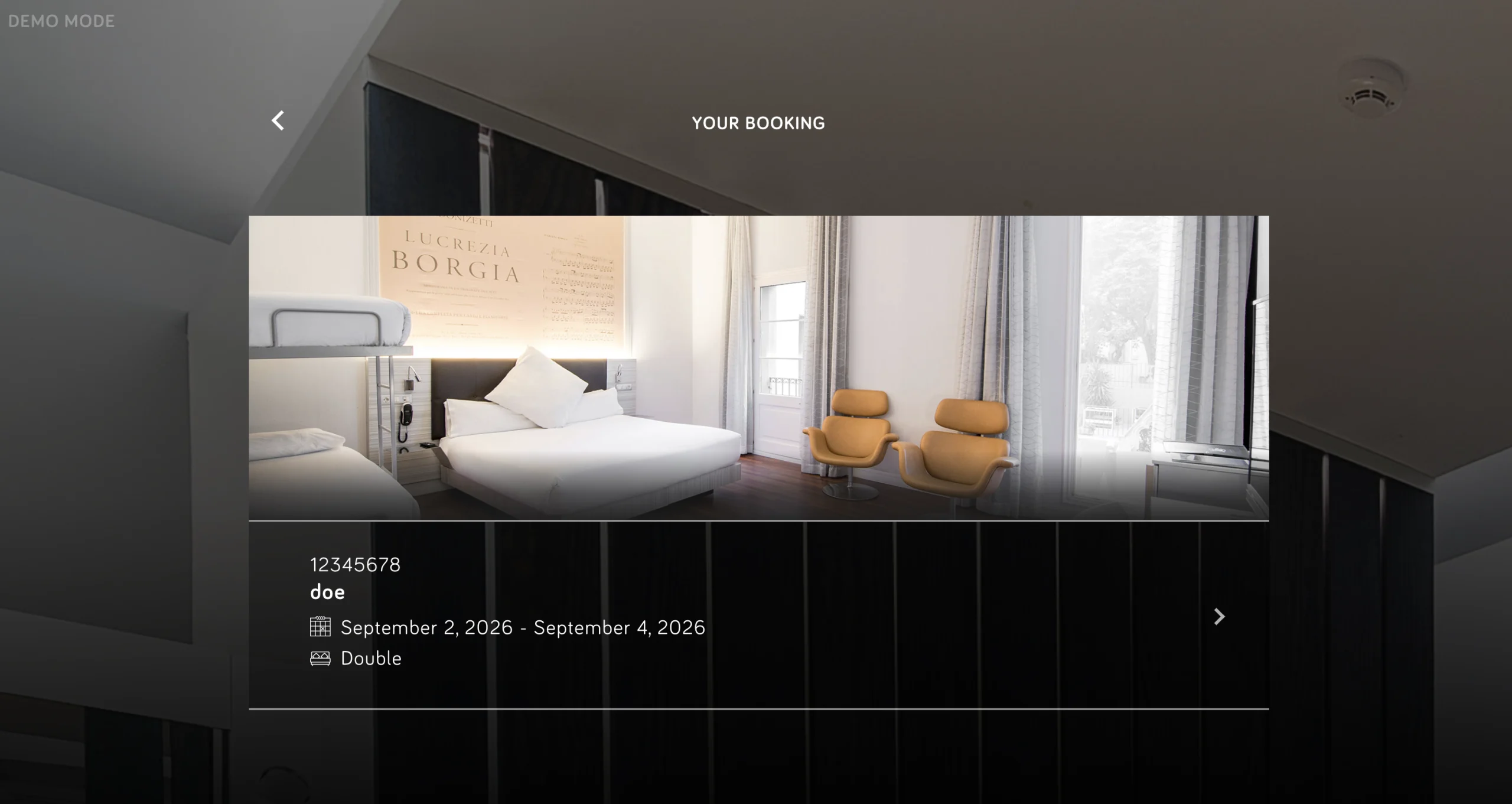
A CRM shouldn't just be limited to storing information. Its true value appears when that data allows you to trigger actions.
An automation can use the booking type, segment, dates or stay characteristics to trigger communications or processes without relying on someone remembering to do it manually.
LEAN allows working with automations for both individual and group bookings, as well as arrival-related communications, such as pre check-in.
Automations for individual bookings
For individual bookings, processes such as sending pre-check-in before arrival, reminders, useful prior information, messages associated with certain profiles, or post-stay communications can be automated.
For example, the content a business guest receives might not be the same as that received by a family. In the same way, a returning guest may need less introductory information than someone visiting the hotel for the first time.
Automation works best when it starts from simple segments and easily controllable rules.
Automations for groups
Groups add complexity: multiple guests, different rooms, specific conditions, payments, notes and prior communications.
A CRM connected to the PMS can help keep attendee data, agreed conditions, assignments, pending payments or relevant information for reception organised.
The advantage is reducing reliance on stray emails, external spreadsheets and hard-to-follow internal communications.
Hotel CRM and pre-check-in: an opportunity before the guest arrives
Pre-check-in is usually understood as a way of gathering information prior to arrival, but it can also be used as part of the pre-stay experience.
It is a suitable time to confirm details, understand certain needs, provide practical information and better prepare for the stay.
With LEAN and POK, this process can be automated from the PMS so that the guest receives the pre-check-in before arriving. As well as reducing front-desk work, it allows the hotel to reach check-in time with more organised information.
When the CRM, PMS and pre-check-in work together, prior communication ceases to be a generic message and can become part of a more contextual relationship with the guest.
Why a hotel CRM helps to build guest loyalty
Customer loyalty stems from the accumulation of good experiences. A CRM helps to build that continuity because it allows you to remember preferences, recognise returning guests and use history to tailor service.
It also makes it easy to personalise communications, anticipate certain needs, win back guests who haven't stayed for a while or direct specific actions towards particular segments.
It can also support a direct sales strategy. A guest who already knows the property and receives relevant communications is more likely to rebook directly than a customer whom the hotel treats as a stranger after each stay.
Building loyalty is not about sending the same discount to the entire database
Sending an identical promotion to thousands of contacts does not automatically turn that action into CRM.
An effective loyalty strategy seeks relevance. A corporate guest may value flexibility and speed. A family might respond better to children's services or holiday stays. A customer who has previously used the spa may be more interested in booking it again than someone who has never shown interest.
The logic should be: right message, right guest and right time.
Integrations for deeper customer management
As the hotel matures its guest strategy, it may require functionalities that go beyond basic PMS management.
LEAN has various integrations to expand this management. Depending on the establishment's needs, the CRM can connect with email marketing, reputation, survey, revenue, booking engine or business intelligence solutions, or platforms specialised in guest experience.
Integration makes sense when it solves a specific need. Adding tools without a defined strategy can end up fragmenting the data that was originally intended to be centralised.
When it makes sense to integrate the CRM with other tools
It usually makes more sense when there is a hotel chain, a high volume of repeat guests, a significant direct sales strategy, loyalty programmes, highly segmented campaigns or advanced reporting needs.
A small hotel can start by correctly using the information available in its PMS and CRM. If it later needs more sophisticated automation or deeper analysis, it can incorporate specific tools.
Evolution should be progressive: first organise the data; then expand capabilities.
How to start working with a hotel CRM without making it complicated
It is not necessary to start with a very sophisticated strategy. For a small or medium-sized hotel, the process can be approached progressively.
First, it is advisable to review the current database and delete or correct duplicates. Afterwards, define a few useful categories and check what relevant information already exists within the PMS: previous stays, preferences, bookings and services used.
Some basic communications and automations can be configured below, such as pre check-in or certain messages associated with the type of reservation.
After a few weeks, the hotel should measure what information it actually uses, which segments make sense and which automations add value. Only then is it worth considering additional integrations.
The correct sequence is simple: order, segment, automate, measure and then scale.
What is a hotel CRM?
What is the difference between a hotel CRM and a PMS?
What is the purpose of categorising hotel guests?
Does a hotel CRM work for hotel chains?
PMS, integrations, automation, data security and tools to digitise the operation.
You might also like Guest experienceDigital check-in, prior communication, personalisation, upselling and in-stay services.
Discover the product PMS integrationsConnect LEAN with distribution, payments, revenue, BI, CRM and other hotel systems.
Related product POK · Digital pre check-inDigitise the check-in process and connect guest data with hotel operations.
Content produced and reviewed by the LEAN editorial team, specialising in hotel PMS, operations, integrations, and guest experience. Last reviewed: 16 June 2026.