


Mobile check-in in hotels: operational efficiency and improved guest experience
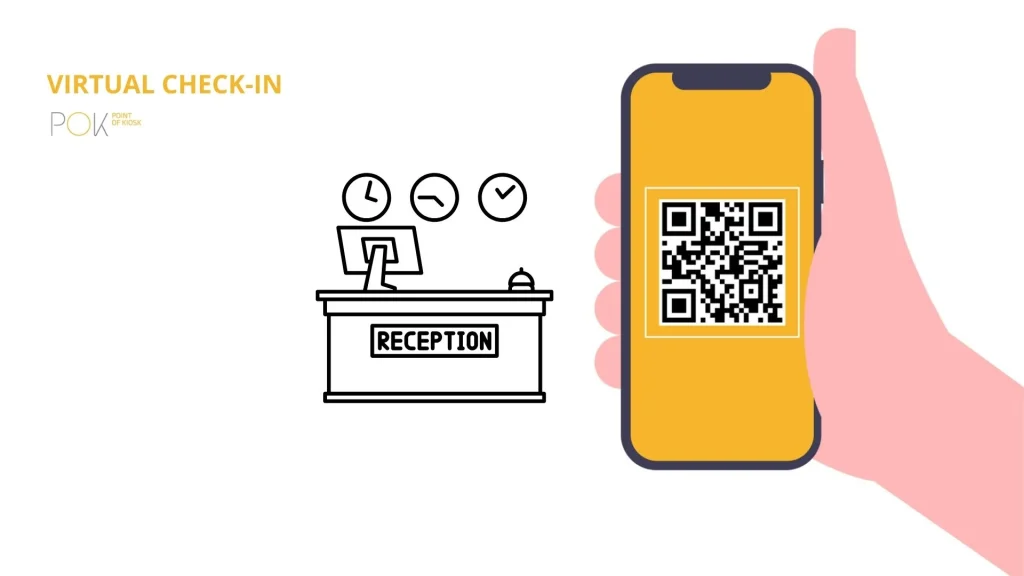
Mobile check-in (or virtual check-in) is a digital process that allows the guest to complete, prior to arrival or upon arrival, the usual reception steps from their own device: provide details, accept terms and conditions, sign where applicable, pay if pending and, in some cases, gain access to the room. For owners, managers and operations managers, it is a natural evolution of the guest journey: it reduces friction on arrival and moves some of the administrative work into a controlled, traceable flow.

This model is usually supported by a PMS in the cloud and specific pre check-in/self check-in solutions, such as LEAN Hotel System and POK Virtual Check-in, which allow centralising data and automating validations without turning the operation into a set of isolated tools. The objective is not to “eliminate reception”, but to redefine the role of the team and improve consistency and control, especially in limited or unattended reception operations.
What it means to check-in via mobile phone
Mobile check-in means that the hotel sends the guest a link or digital access (usually after booking or prior to arrival) to complete the necessary information without going to a front desk. Instead of filling out forms at the front desk, the guest enters their data into a guided interface and the system validates and dumps it into the PMS.
The difference compared to the traditional process is not only the “channel” (mobile vs. paper): it is that mobile check-in turns the arrival into a pre-structured process, where the hotel can define conditions (e.g. full details and guaranteed payment) before enabling check-in or assigning a room.
How mobile check-in works step by step in a hotel
Although each host adapts it, the flow usually follows these phases (with nuances depending on local regulations and level of digitisation):
- Sending access to check-in: the guest receives a link (email/SMS/WhatsApp) associated with their booking on the day of arrival.
- Data registrationComplete identification and contact information, and confirm details of the stay.
- Validation and consistencyThe system checks that the information matches the booking and that it is complete.
- Acceptance and signature (if applicable): consents/acceptances and, where appropriate, digital signature of operational documents are collected.
- Payments (if applicable): payment of outstanding amounts, deposits or pre-authorisations via integrated gateway.
- Confirmation of check-inPMS receives the status and leaves traceability of the operation (date, user/guest, changes).
- Access deliveryDepending on the hotel model, a PIN/code, a mobile key, a QR, or a referral to a kiosk/self-check-in kiosk at the destination can be enabled.
In solutions such as POK, during pre check-in or self check-in, extras can be displayed (breakfast, parking, late check-out), signature and payment can be managed, and in “virtual check-in” scenarios, PIN access can be given if the locking system supports it. The operational key is that everything is integrated with the PMS to avoid duplication and manual tasks.
Operational benefits of mobile check-in for the hotel
For management, mobile check-in is useful when it reduces repetitive work without losing control:
- Fewer queues and peaks at reception, by transferring tasks to the previous phase.
- Reduced administrative burden (less manual transcription, less paper forms).
- Error reduction in data and collections when there are automatic validations and rules.
- Better allocation of staffThe team can spend more time on hospitality, complex issues and quality.
- More traceabilityThe following is recorded: what was completed, when and with what changes, which facilitates internal audits and operational closures.
These benefits are often more consistent when the PMS automates statuses (check-in completed, payment pending, document incomplete) and triggers clear actions (reminders, blocking access if steps are missing, etc.).
Mobile check-in and legal compliance: issues to consider
Mobile check-in can be implemented securely, but must be designed to comply with identity verification, traveller registration and data protection.
In Spain, for example, Royal Decree 933/2021 regulates the registration and reporting obligations for accommodation activities, and the Ministry of the Interior offers the SES.HOSPEDAJES platform for the transmission of this data.
In other European countries, the approach is similar, although with different regulatory and operational frameworks. In Italy, accommodation providers are required to communicate guest data to the Questura through the Alloggiati Web system. In France, the obligation to register is implemented by the fiche individuelle de police for certain guests, while in Germany there are registration requirements (Meldeschein) which have been evolving in recent years, especially with regard to nationals and foreign nationals.
Outside Europe, there are also specific obligations. In countries such as the United States, identification and registration requirements vary at the state or local level, while in many Latin American destinations, authorities require regular submission of guest information to migration or tourism agencies, with their own forms and deadlines.
In data protection (GDPR), the principle of minimisation implies collecting only what is necessary for the intended purpose. Along these lines, different data protection authorities have pointed out that a copy of the ID card or passport should not be requested or kept for registration in accommodation, as this is excessive processing; identity can be verified and the data required by the applicable regulations can be collected by means of forms or other mechanisms.
As a rule of caution, the exact requirements vary by country and by casuistry (minors, groups, corporate bookings), so it is advisable to validate the mobile check-in settings with legal counsel or DPD when in doubt.
Integration of mobile check-in with PMS and other hotel systems
Mobile check-in works well when it is connected to the operating ecosystem:
PMS
Core where booking, profile, check-in status, allocation and billing are consolidated.
Payments
Gateway/TPV for pre-collections, deposits or pre-authorisations with traceable reference
Access
Electronic locks, mobile keys or generation of temporary codes/PINs.
Housekeeping
Real-time room statuses to avoid erroneous room assignments or non-ready room arrivals.
Messaging/support
Channel for queries and escalation of incidents (especially critical if reception is unattended).
An integrated environment reduces “silos” (e.g. the host filling data into a tool that someone then has to re-enter). In technology clusters with large ecosystems, such as Zucchetti Group, (The important thing, in any case, is the actual integration and control of data, not the name of the supplier).
What kind of hotels can benefit most from mobile check-in?
Mobile check-in can add value in both large and small hotels, but it is particularly well suited to hotels where there is a need for mobile check-in:
- High turnover and arrival peaks (urban hotels, business, weekends).
- Adjusted insoles or reception with limited opening hours.
- Accommodation with unattended or hybrid operation, where access and care are supported by digital processes and remote support.
- Boutiques and aparthotels seeking seamless experience without expanding administrative structure.
It is not a universal solution: if your value proposition is based on a highly personalised welcome or your typical customer prefers face-to-face interaction, the model may work best as a complementary option (mobile + traditional reception) instead of substitution.
Frequently asked questions about mobile check-in at hotels
Does mobile check-in completely replace traditional reception?
Not necessarily. In many hotels it acts as a complement: it reduces administrative tasks and queues, but the team is still key for incidents, personalised attention and special case management. In hybrid or unattended models, reception changes format (remote support, reduced shifts), it does not disappear.
Is mobile check-in secure for guest data?
It can be if a data protection approach is applied: collect only what is necessary, use encrypted connections, control access, record changes and define retention periods. The GDPR requires principles such as minimisation and security. In addition, in Spain, the AEPD advises against requesting/copying ID cards or passports due to excessive data.
What does a hotel need to implement mobile check-in?
As a basis, a PMS in the cloud able to receive pre-check-in data, clear operational rules (what is mandatory before confirming), integration with payments if there are pre-collections and, if digital access is desired, integration with locks or code system. A support channel for queries and incidents is also recommended.
Is mobile check-in useful for small hotels or only for large chains?
It is also useful in smaller hotels, especially if they are looking to reduce administrative burden, operate with limited reception or standardise processes between shifts. The key is to size the scope: start with pre-check-in (data and payments) and expand to digital access if it makes sense. In all cases, ensure integration and traceability.
You may also be interested in


REQUEST YOUR DEMO TODAY
Discover how Lean Hotel System can transform your hotel business