


Augmented and virtual reality to enhance the guest experience in hotels
Augmented reality (AR) and virtual reality (VR) are entering the hospitality industry with a clear pattern: when used to solve specific problems (doubts, orientation, upselling, service information), they work; when presented as a “gadget,” they are abandoned. For management, operations, and marketing in large hotels, the useful question is not “should we have AR/VR?”, but: What friction do we reduce, what experience do we improve, and what does operating it entail?
The trend points towards a more virtual future with a focus on experience: there will be increasingly more AR/VR tools, and naturally, PMS will tend to offer their own functionalities or, more commonly, integrations with specialised providers to activate content and measure usage. The key is to start with realistic, measurable, and sustainable use cases.
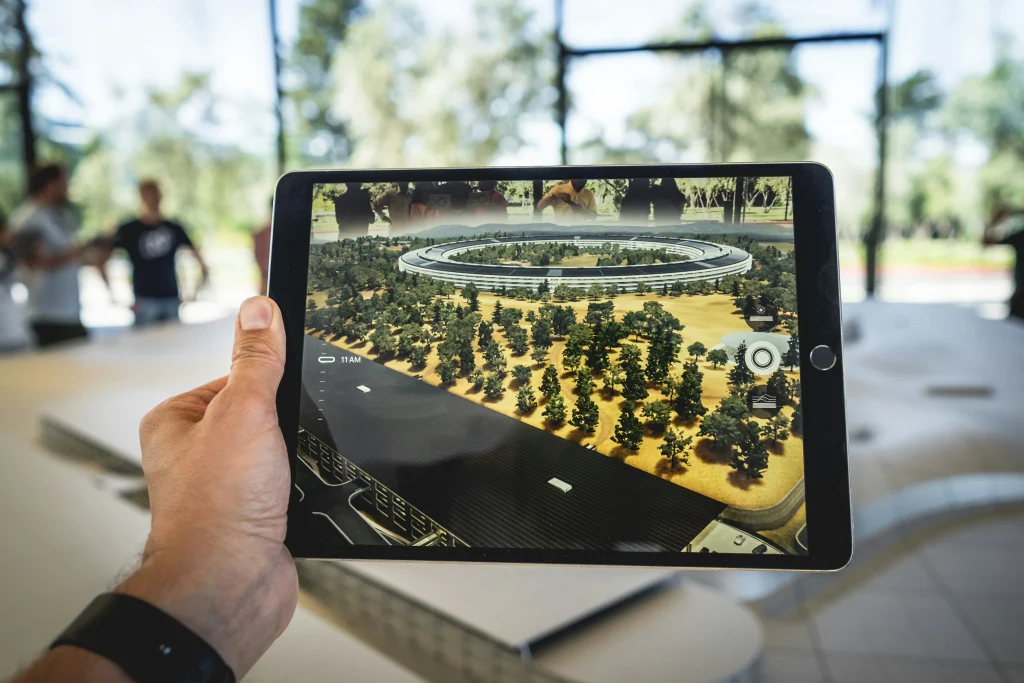
AR vs VR: what each offers guests (and when to use it)
AR (Augmented Reality) It superimposes information about the real environment, normally from a mobile phone. It is useful when the guest is in the hotel and needs quick help without installing anything or using hardware. Typical examples: indoor maps, digital signage, instructions for using amenities, access to timetables and services by zone.
VR (virtual reality) It offers immersion, with viewers or even from mobile, and usually works best before booking or when the aim is to “show” something that is difficult to explain: actual views, size, layout, spa, MICE, or unique experiences. In large hotels and resorts, VR can reduce uncertainty and align expectations, but it requires more content and, if there are viewers, more operation.
Rule of thumb: AR for everyday utility and reducing questions; VR for impact, confidence, and conversion when the product sells better “seen”.
Use cases with “soft” but real ROI: experience, trust, and conversion
AR/VR is rarely justified by a single immediate financial metric. Its return is typically “soft” but real in operation and experience:
- Reduce uncertaintyFewer doubts, less “it wasn't what I expected.”.
- Improve guidancefewer interruptions for reception and better guest autonomy.
- Increase perceived valueThe guest better understands the product and the destination.
- Boost upsellingSeeing the difference reduces friction and negotiation.
- Differentiate brand: especially in large hotels with complex offerings (MICE, spa, kids, multiple categories).
The realistic expectation is: a better experience and better conversion in specific points of the journey, not “guaranteed more sales”.
VR Before Booking: Immersive Tours That Reduce Doubts and Returns
A VR tour can be particularly useful when guests need to “see” to decide: room categories with subtle differences, views, actual size, communal areas, spa facilities, family areas, MICE rooms, or premium facilities.
Often contributes more in:
- large hotels with multiple typologies,
- Resorts with a wide range of offers.,
- differential product where the image changes the decision,
- international markets where the guest does not know the destination.
The aim of the tour isn't to impress; it's align expectations and reduce discrepancies between what was imagined and what is found.
What should a tour teach so that it doesn't seem like “empty marketing”
A credible tour usually follows a “reality” script:
- Show 2–3 comparable room types (without hiding “standard”).,
- include references to space and movement (entrance, bathroom, wardrobe, work area),
- teaching real-world views with context (what you actually see),
- walk from lobby to key areas (lift, corridors, entrances),
- clarify what is extra (parking, breakfast, spa, etc.) without overwhelming.
If the tour promises more than it then delivers, the effect backfires: inflated expectations and complaints.
AR at the hotel: interactive guide to getting around, understanding services and resolving queries
AR is particularly interesting because it can work with just a mobile phone and QR codes: less hardware, less support. As an “assistant”, it can reduce repeated questions and improve guest autonomy:
- indoor map or digital signage (“how to get to the spa”, “where is the kids club”),
- Timetables and contextual services by area,
- accessibility and useful directions (without making it a maze),
- Brief information on usage and rules (pool, gym, terrace).
In large hotels, where guests are more likely to get lost, AR can be an experience “multiplier” if it's well-distributed (few points, very useful).
AR for rooms: how to improve the experience without disturbing
In a room, the priority is not to intrude. What usually works is a discreet QR code that opens specific information:
- how to use the air conditioning, safe, TV or home automation,
- Responsible consumption tips (brief and without preaching):,
- quick contact with reception and incident channel,
- Frequently Asked Questions (“How does late check-out work?”, “Where is the gym?”).
This reduces calls due to technical queries and improves the guest's sense of control, without adding extra messages.
Immersive local experiences: culture, storytelling and personalisation
AR/VR can also extend the experience beyond the hotel: routes, heritage, gastronomy or destination storytelling. In large hotels, this can be integrated as a value proposition (and loyalty) when offered simply.
- Self-guided AR routes with points of interest,
- VR “intro” experiences of the destination to inspire.,
- Contextual content that recommends plans based on weather/time.
The return here is usually about reputation and differentiation: the guest feels the hotel offers them value, not just accommodation.
How to stop it from being a “gadget” that nobody uses
Three rules usually mark adoption:
- Easy access (mobile/QR, no app installation necessary),
- Concrete utility (resolve a doubt, guide a tour, show a bonus),
- Promotion at the right times (pre-arrival, check-in, lift, room), without bombarding.
If the guest doesn't understand “what for”, they won't use it, even if it's spectacular.
Upselling with AR/VR: selling extras without pressure
Visualisation reduces uncertainty and makes the guest understand the value without a long sales pitch. Typical cases:
- See the difference between standard vs premium (space, views, layout).,
- View from the upper floor or private terrace,
- Show cabana/pool day pass or lounge area,
- “Spa visual menu (ambience, circuit, treatment types).
This does not eliminate the need for human interaction, but it changes the conversation: less “haggling” and more informed decision-making.
Where does this fit in the customer journey
The points where it usually fits best without noise:
- Confirmation and pre-stay (a useful link, not a campaign),
- Check-in (a brief recommendation based on profile),
- QR code in the room for daily use,
- hotel app is already existing and in use.
The idea is to add in 1-2 instances, not create a “chain” of messages.
Operation and maintenance: what usually determines success
The operational side is often the real filter for AR/VR. Before investing, it's worth considering:
- Content creation and updatingRooms change, menus change, schedules change.
- Content ownershipwho manages it and how it is updated.
- Multilingual: in large hotels it is usually critical for real use.
- ConnectivityIf the WiFi fails, the experience is ruined.
- Reception supportWhat does the team do if a guest asks or cannot access.
- Hygiene and logistics if there are viewers (cleaning, loading, storage).
- Accessibilityoffer alternatives without VR for those who cannot or do not want to use it.
This is where many initiatives fall down: the “pilot” works and then is abandoned for lack of maintenance.
AR/VR “light” vs “premium”: two tiers for large hotels
If AR/VR collects data (usage tracking, preferences, personalisation), it is advisable to apply simple principles: transparency, minimisation, and control. Explain what is measured, for what purpose, and offer reasonable options. For specific compliance and privacy decisions, it is appropriate to review it with the hotel's legal/privacy officers, as it depends on the jurisdiction and implementation.
The role of PMS today and tomorrow: integrations as a natural path to adoption
The actual adoption of AR/VR in hospitality will tend to integrate with the system ecosystem: PMS, CRM, engine, upselling tools. The trend is clear: the future will be more virtual with a focus on experience, and PMS will end up offering their own AR/VR tools or, more commonly, integrations with specialised companies in the market.
Integration offers something very practical: activating content according to booking/segment, linking extras, measuring usage and coordinating communications. It's not about promising specific functions, but about understanding that utility grows when AR/VR stops being “a standalone web” and connects with processes.
What should an integration allow to be useful for the hotelier
Practical criteria for evaluating suppliers/integrations:
- Segmentation by guest or booking type (without excessive complexity),
- staged activation (pre-arrival / in-stay),
- catalogue of extras linked to what is shown,
- multilingual,
- Basic analytics of usage and clicks,
- Roles/permissions for the team to manage safely.
Frequently asked questions about augmented and virtual reality in hotels
The difference between augmented reality and virtual reality in a hotel is:**Augmented Reality (AR)**: This technology overlays digital information onto the real world. In a hotel context, this could mean:
* **Point your phone at a menu**: to see photos and descriptions of dishes, or even 3D models of the food.
* **Scan a landmark**: to get its history or information about nearby attractions.
* **See directions overlaid on the floor**: as you walk through the hotel.
* **Receive pop-up information**: about hotel features or services as you look around.AR enhances your existing physical environment with digital elements.**Virtual Reality (VR)**: This technology immerses you in a completely digital, simulated environment, typically experienced through a VR headset. In a hotel context, this could mean:
* **Virtual tours**: of rooms, suites, or facilities from anywhere in the world before booking.
* **Simulated experiences**: of dining in the hotel restaurant, relaxing by the pool, or attending an event, all without being physically present.
* **Interactive hotel exploration**: where you can "walk" through the hotel and interact with digital representations of its features.VR replaces your real-world environment with a digital one.In essence, AR **adds** digital elements to your real world, while VR **replaces** your real world with a digital one.
Augmented reality (AR) adds information about the real environment, typically from a mobile device (for example, a QR code that shows how to use the air conditioning or directs you to the spa). Virtual reality (VR) creates an immersive experience, ideal for tours of rooms or spaces before booking, using headsets or even from a mobile device.
What use case typically works best to start with?
To start, a “light” pilot with a mobile app and QR code often works: service guides, indoor maps, or in-room instructions to reduce calls and queries. If the objective is conversion, a simple tour of 1-2 room categories can also be a good starting point. The important thing is a single objective and minimal useful content.
Do I need VR glasses or can I do it with my mobile phone?
Many cases are resolved with mobile devices, especially augmented reality and accessible tours. VR viewers add impact and brand experience, but increase operation: hygiene, charging, maintenance, and support. In large hotels, it's usually wiser to start with mobile/QR and scale up to viewers if usage warrants it.
Augmented reality (AR) and virtual reality (VR) can help sell upgrades and extras by allowing customers to visualise these additions in a more immersive and interactive way. Here's how:**1. Enhanced Visualisation and Customisation:*** **AR:** Customers can use their smartphones or tablets to overlay virtual upgrades or extras onto their existing products or environments. For example, a customer looking to buy a new sofa could use AR to see how different upholstery options or an added accent cushion would look in their living room. A car buyer could visualise different wheel designs or interior trim options on a virtual model of the car.
* **VR:** VR offers an even more immersive experience. Customers can step into a virtual showroom and explore different configurations of a product with all the upgrades and extras already applied. This allows them to experience how these additions affect the overall look, feel, and functionality. Think of a gamer using VR to customise their gaming rig with different components, or a homeowner using VR to design their dream kitchen with premium appliances and finishes.**2. Try Before You Buy Experience:*** **Reduced Perceived Risk:** By allowing customers to see and interact with upgrades and extras in a realistic virtual environment, AR/VR reduces the uncertainty associated with purchasing. Customers can feel more confident in their choices, knowing exactly what they're getting.
* **Emotional Connection:** The immersive nature of AR/VR can create a stronger emotional connection with the product and its potential enhancements. This can lead to a greater desire to purchase those extras that make the product more personalised or valuable.**3. Demonstrating Value and Functionality:*** **Interactive Showcases:** AR/VR can be used to demonstrate the benefits and functionality of upgrades and extras in a dynamic way. For instance, a virtual tour of a smart home could show how upgraded features like smart lighting or a security system work. The added features become more tangible and desirable when their purpose is clearly demonstrated.
* **"Wow" Factor:** The novelty and technological sophistication of AR/VR can create a memorable and engaging sales experience. This "wow" factor can make upgrades and extras stand out and become more appealing to customers.**4. Personalised Recommendations and Upselling:*** **Data-Driven Insights:** As customers interact with AR/VR experiences, businesses can gather data on their preferences. This data can then be used to offer personalised recommendations for upgrades and extras that are most likely to be of interest.
* **Contextual Upselling:** AR/VR allows for contextual upselling. For example, while a customer is customising a car in VR, the system could suggest premium sound systems or upgraded performance packages that complement their chosen configuration.**5. Streamlined Sales Process:*** **Efficient Exploration:** Customers can explore a wide range of options and configurations much faster in AR/VR than by browsing physical showrooms and catalogues. This efficiency can lead to quicker purchasing decisions.
* **Remote Sales:** AR/VR can facilitate remote sales. Customers can explore and customise products with upgrades and extras from the comfort of their own homes, breaking down geographical barriers.**Specific Examples:*** **Automotive:** Visualising different paint colours, wheel styles, interior materials, and optional technology packages.
* **Retail:** Trying on virtual clothing with different accessories, visualising furniture in a room, or customising a product with special editions or features.
* **Real Estate:** Experiencing virtual tours of properties with different interior design options, furniture layouts, and finishing upgrades.
* **Gaming:** Customising virtual avatars, game environments, or in-game items.
* **Home Improvement:** Visualising new kitchen cabinets, bathroom fixtures, or landscaping elements.In essence, AR/VR transforms the abstract idea of an upgrade or an extra into a tangible, desirable, and personalised experience, making it much easier for customers to commit to those value-adding additions.
Visualisation reduces uncertainty: the guest better understands what they gain from an upgrade (space, view, layout) or an extra (spa, cabana, late check-out). This reduces friction in decision-making and avoids lengthy explanations. It works particularly well when there are differences that are “difficult to explain” with text alone.
What operational risks should I consider?
The most common problems are outdated content, lack of support at reception, insufficient connectivity, incomplete multilingual support, and, if VR headsets are involved, hygiene and logistics. It's also worth considering accessibility: offering non-VR alternatives for those who don't want to or can't use it. Success usually depends more on operation than on technology.
Will this integrate with PMS?
The trend points towards yes, mainly through integrations with specialised providers. PMSs will tend to incorporate their own AR/VR tools or connectors to activate experiences based on bookings, segment content, and measure usage. Integration helps coordinate communications and link upsells, although the specific functionality depends on the provider and the hotel's ecosystem.
You may also be interested in


REQUEST YOUR DEMO TODAY
Discover how Lean Hotel System can transform your hotel business